4.6.0.0. Diagnostic Tests for Susp. Hypopituitarism
|
Table 2.3—Criteria for testing for diabetes or prediabetes in asymptomatic adults |
|
|---|---|
|
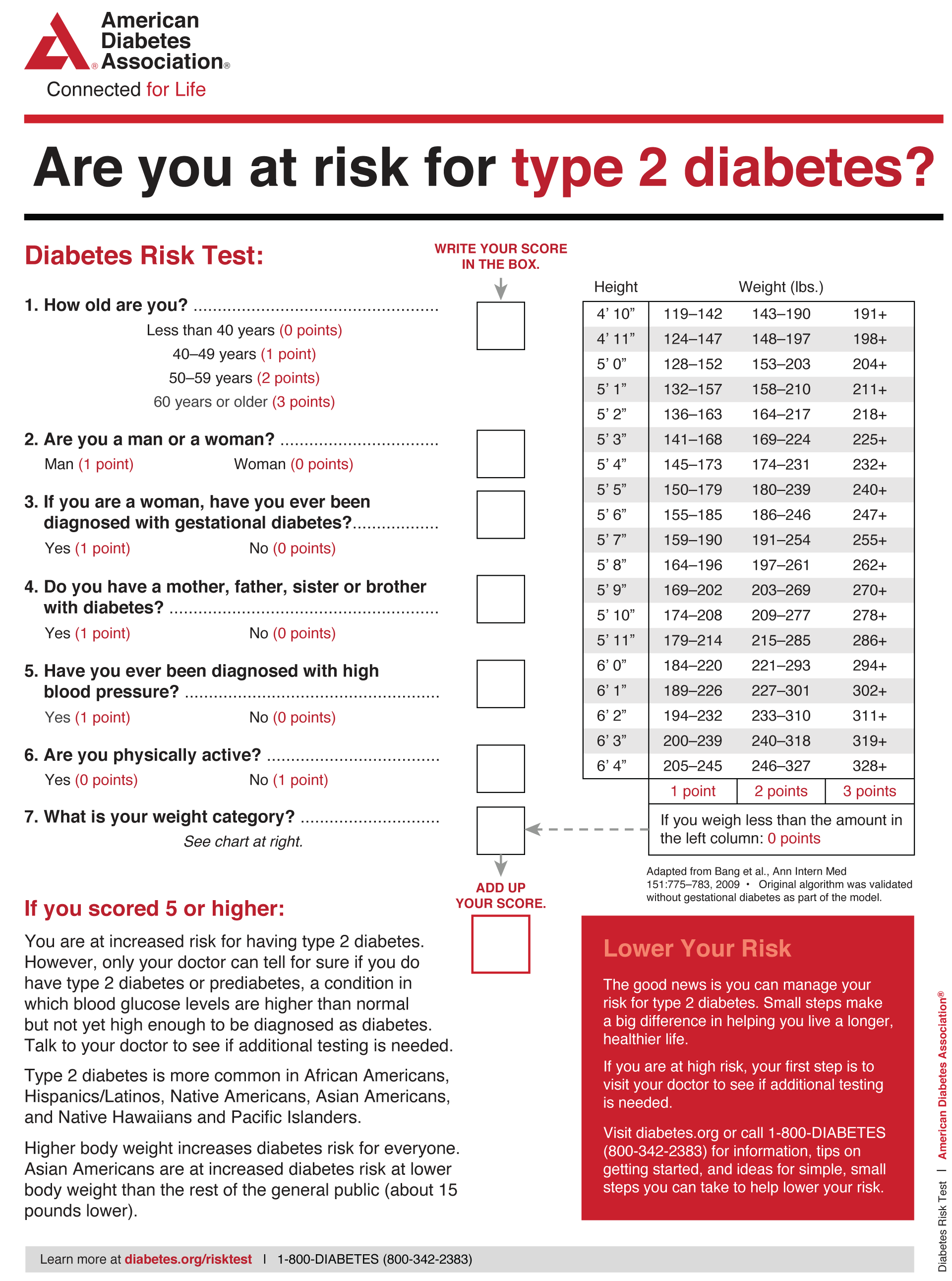
1. Testing should be considered in overweight or obese (BMI ≥25 kg/m2 or ≥23 kg/m2 in Asian Americans) adults who have one or more of the following risk factors: First-degree relative with diabetes High-risk race/ethnicity (e.g., African American, Latino, Native American, Asian American, Pacific Islander) History of CVD Hypertension (≥140/90 mmHg or on therapy for hypertension) HDL cholesterol level <35 mg/dL (0.90 mmol/L) and/or a triglyceride level >250 mg/dL (2.82 mmol/L) Women with polycystic ovary syndrome Physical inactivity Other clinical conditions associated with insulin resistance (e.g., severe obesity, acanthosis nigricans) |
|
|
2. Patients with prediabetes (A1C ≥5.7% [39 mmol/mol], IGT, or IFG) should be tested yearly. |
|
|
3. Women who were diagnosed with GDM should have lifelong testing at least every 3 years. |
|
|
4. For all other patients, testing should begin at age 45 years. |
|
|
5. If results are normal, testing should be repeated at a minimum of 3-year intervals, with consideration of more frequent testing depending on initial results and risk category. |
|