3.2.0.0 Definition of Glucose Abnormalities
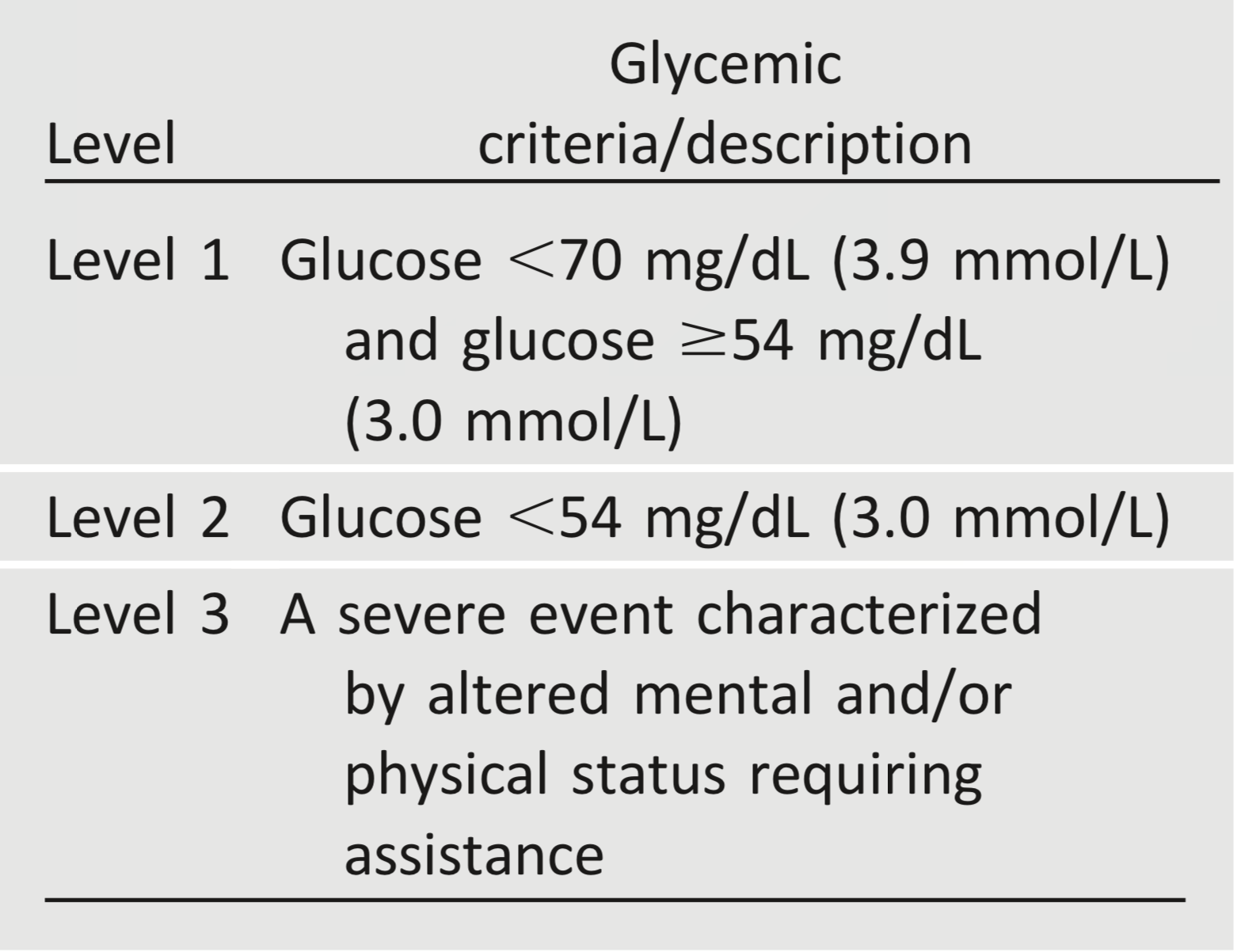
Hyperglycemia in hospitalized patients is defined as blood glucose levels >140 mg/dL (7.8 mmol/L) (2,20). Blood glucose levels that are persistently above this level may require alterations in diet or a change in medications that cause hyperglycemia. An admission A1C value ≥6.5% (48 mmol/mol) suggests that diabetes preceded hospitalization (see Section 2 “Classification and Diagnosis of Diabetes”) (2,20). Level 1 hypoglycemia in hospitalized patients is defined as a measurable glucose concentration <70 mg/dL (3.9 mmol/L) but ≥54 mg/dL (3.0 mmol/L). Level 2 hypoglycemia (defined as a blood glucose concentration <54 mg/dL [3.0 mmol/L]) is the threshold at which neuroglycopenic symptoms begin to occur and requires immediate action to resolve the hypoglycemic event. Lastly, level 3 hypoglycemia is defined as a severe event characterized by altered mental and/or physical functioning that requires assistance from another person for recovery. See Table 15.1 for levels of hypoglycemia (21). Hypoglycemia is discussed more fully below.
Table 15.1—Levels of hypoglycemia (21)