3.0.0.0 NUTRITION THERAPY
3.1.0.0 Overview
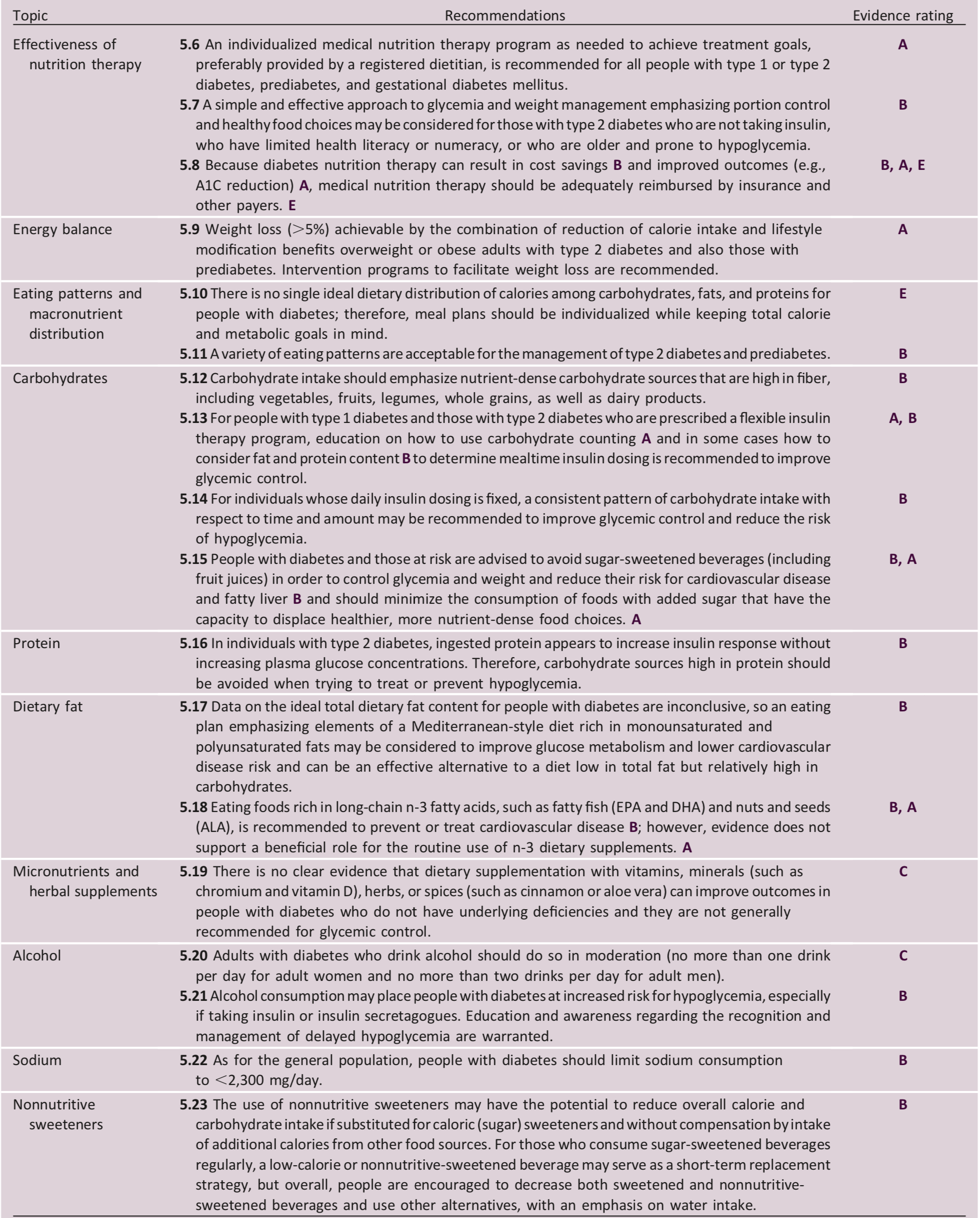
For many individuals with diabetes, the most challenging part of the treatment plan is determining what to eat and following a meal plan. There is not a one-size-fits-all eating pattern for individuals with diabetes, and meal planning should be individualized. Nutrition therapy has an integral role in overall diabetes management, and each person with diabetes should be actively engaged in education, self-management, and treatment planning with his or her health care team, including the collaborative development of an individualized eating plan (35,48). All individuals with diabetes should be offered a referral for individualized MNT provided by a registered dietitian (RD) who is knowledgeable and skilled in providing diabetes-specific MNT (49). MNT delivered by an RD is associated with A1C decreases of 1.0–1.9% for people with type 1 diabetes (50) and 0.3–2% for people with type 2 diabetes (50). See Table 5.1 for specific nutrition recommendations. Because of the progressive nature of type 2 diabetes, lifestyle changes alone may not be adequate to maintain euglycemia over time. However, after medication is initiated, nutrition therapy continues to be an important component and should be integrated with the overall treatment plan (48).
Table 5.1—Medical nutrition therapy recommendations